Zhang Tao, Zhang Bo, and Fritz E. Kühn | Chemical Reviews: Single-Atom Catalysts for Biomass Valorization
Journal: Chemical Reviews
Publication Date: November 23, 2026
DOI: 10.1021/acs.chemrev.6c00675
Corresponding Authors:
Fritz E. Kühn: Catalysis Research Center, Department of Chemistry, School of Natural Sciences, Technical University of Munich, Germany.
Bo Zhang: Key Laboratory of Applied Catalysis Science and Technology, Dalian Institute of Chemical Physics, Chinese Academy of Sciences; University of Chinese Academy of Sciences, China.
Tao Zhang: State Key Laboratory of Catalysis, Dalian Institute of Chemical Physics, Chinese Academy of Sciences; University of Chinese Academy of Sciences, China; TUM Institute for Advanced Study, Technical University of Munich, Germany.
1. Background
Biomass is the only renewable organic carbon resource on Earth. Lignocellulosic biomass, consisting primarily of cellulose, hemicellulose, and lignin, possesses a complex structure with diverse functional groups. The selective activation of specific C–O, C=O, and C=C bonds while suppressing undesired side reactions remains a central challenge in biomass valorization.
Conventional metal nanoparticle catalysts suffer from relatively low metal atom utilization because most bulk metal atoms do not directly participate in catalytic reactions, leading to high precious-metal consumption and catalyst costs.
Single-atom catalysts (SACs), in which isolated metal atoms are stabilized on solid supports, combine the high atomic utilization and tunable coordination environments associated with molecular catalysts with the stability and recyclability of heterogeneous catalysts.
The coordinatively unsaturated nature of isolated metal sites enables precise regulation of the local catalytic microenvironment through metal–support interactions (MSIs). Meanwhile, isolated metal atoms can modify the electronic structure of the support, promoting bifunctional catalysis and hydrogen spillover.
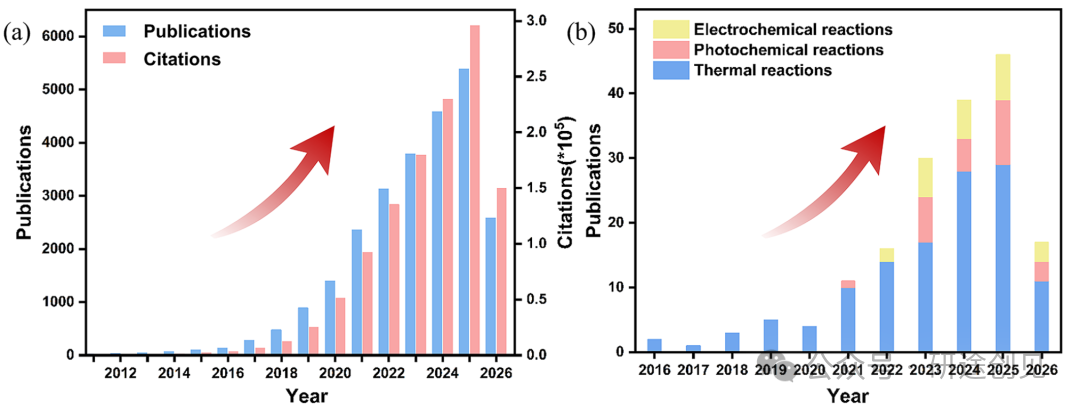
This review systematically summarizes the applications of SACs in lignocellulosic biomass and biomass-derived platform molecule conversion, covering thermocatalysis, electrocatalysis, and photocatalysis.
The discussion is organized around four major reaction categories: selective hydrogenation, hydrogenolysis, reductive amination, and oxidation, with particular emphasis on structure–activity relationships and active-site design principles.
2. Selective Hydrogenation
2.1 Furan Compounds
Furfural (FFA) is obtained through the dehydration of xylose derived from hemicellulose, whereas 5-hydroxymethylfurfural (5-HMF) is produced through the acid-catalyzed dehydration of fructose.
Both compounds contain a furan ring with C=C bonds and an aldehyde C=O group, while 5-HMF additionally possesses a hydroxymethyl group. Selective hydrogenation of C=O while preserving C=C bonds is therefore essential.
Hydrogenation of the carbonyl group in FFA produces furfuryl alcohol (FAL), whereas 5-HMF can be converted into 2,5-bis(hydroxymethyl)furan (BHMF). Further ring-opening hydrogenation can generate 1-hydroxyhexane-2,5-dione (HHD).
Conventional metal nanoparticles tend to promote C=C hydrogenation and overhydrogenation through homolytic H2 dissociation. In contrast, isolated metal sites in SACs can restrict the co-adsorption of multiple hydrogen atoms and facilitate heterolytic H2 cleavage, generating hydridic M–Hδ− species that preferentially hydrogenate polar C=O bonds.
Noble-metal SACs. Pd1/α-MoC achieved 96.7% FFA conversion and 92.4% FAL selectivity at 80 °C under 1 MPa H2, with catalytic activity primarily originating from Pd sites rather than acidic Mo sites.
Pd1Cun/Al2O3, containing only 0.0067 wt% Pd, combined the selectivity of Cu with the H2 dissociation ability of Pd. However, Cu leaching during recycling resulted in a 3.5% decrease in product yield after two cycles.
Pt1/CoAlOx delivered FAL selectivity above 99% at room temperature under 0.1 MPa H2. In contrast, Pt nanoclusters promoted the simultaneous adsorption of C=O and C=C bonds, producing tetrahydrofurfuryl alcohol (THFOL). In situ infrared spectroscopy and theoretical calculations indicated that isolated Pt atoms preferentially adsorb C=O, whereas adjacent Pt atoms facilitate co-adsorption and hydrogenation of both functionalities.
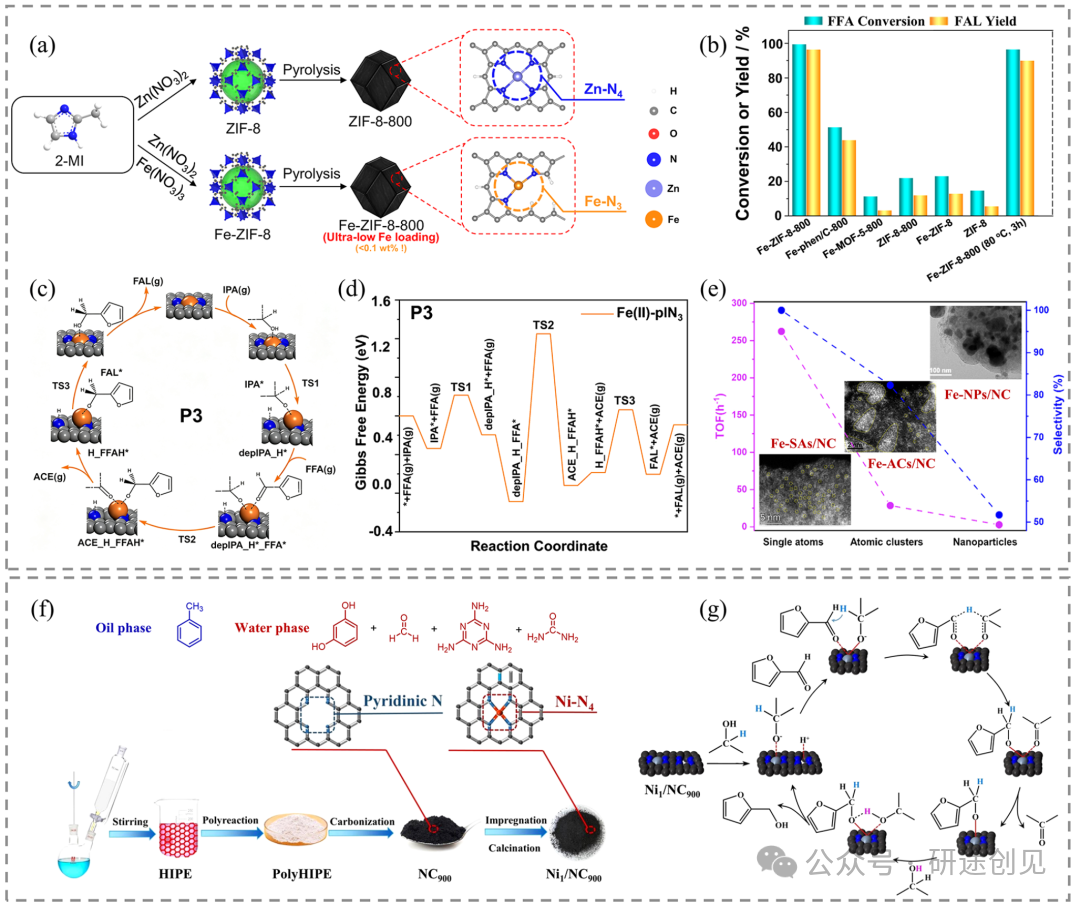
Non-noble-metal SACs. Fe-ZIF-8-800, containing flexible Fe(II)–N3 sites, achieved 99.5% conversion and 93.1% FAL selectivity at 120 °C within 1 h, with a turnover frequency (TOF) of 1,882 h-1. The flexible coordination structure enabled cooperative adsorption involving furan oxygen and hydroxyl groups, facilitating Meerwein–Ponndorf–Verley (MPV) transfer hydrogenation. In contrast, rigid Fe(II)–N4 sites exhibited poor activity due to steric constraints.
Fe-SAs/NC achieved 91.3% FAL selectivity and a TOF of 262.3 h-1. The η¹(O) vertical adsorption configuration preserved the furan ring, while its catalytic activity was approximately 9 and 94 times higher than those of the corresponding clusters and nanoparticles, respectively.
Ni-SAs/NC exhibited a TOF of 832 h-1 and 97.1% selectivity through cooperation between Lewis-acidic Ni centers and basic pyridinic nitrogen sites.
Ni1/NC900 achieved both conversion and selectivity of 99.0%, with a TOF of 2,908.1 h-1.
In Ni1+NPs/NSPC, nanoparticles dissociated H2, while isolated Ni atoms activated the substrate, enabling hydrogenation through hydrogen spillover.
Co1/NiO achieved 99% conversion and 97% FAL selectivity at 120 °C under 1 bar Ar, with a productivity of 18.9 mol_FAL mol_Co-1 h-1, increasing to 37.8 under H2. Co–O sites associated with NiO oxygen vacancies facilitated the MPV pathway.
Photo- and electrocatalytic hydrogenation. The molten-salt-derived Janus photocatalyst 0.5Pd/TiO2 achieved nearly quantitative FAL production using ethanol as the hydrogen donor. Proton-coupled electron transfer (PCET) promoted selective hydrogenation, while dimeric byproducts could be converted back into monomeric alcohols through C–C cleavage coupled with PCET. Various aldehydes and diols were obtained in yields of 81–99%.
For electrocatalysis, density functional theory (DFT) screening of M–N–C catalysts identified CrxNxC as selectively producing FAL, although the Faradaic efficiency (FE) was only approximately 18%. Co-, Fe-, and Ni-based systems primarily promoted coupling to furoin, with FE values below 3%, highlighting competition from the hydrogen evolution reaction.
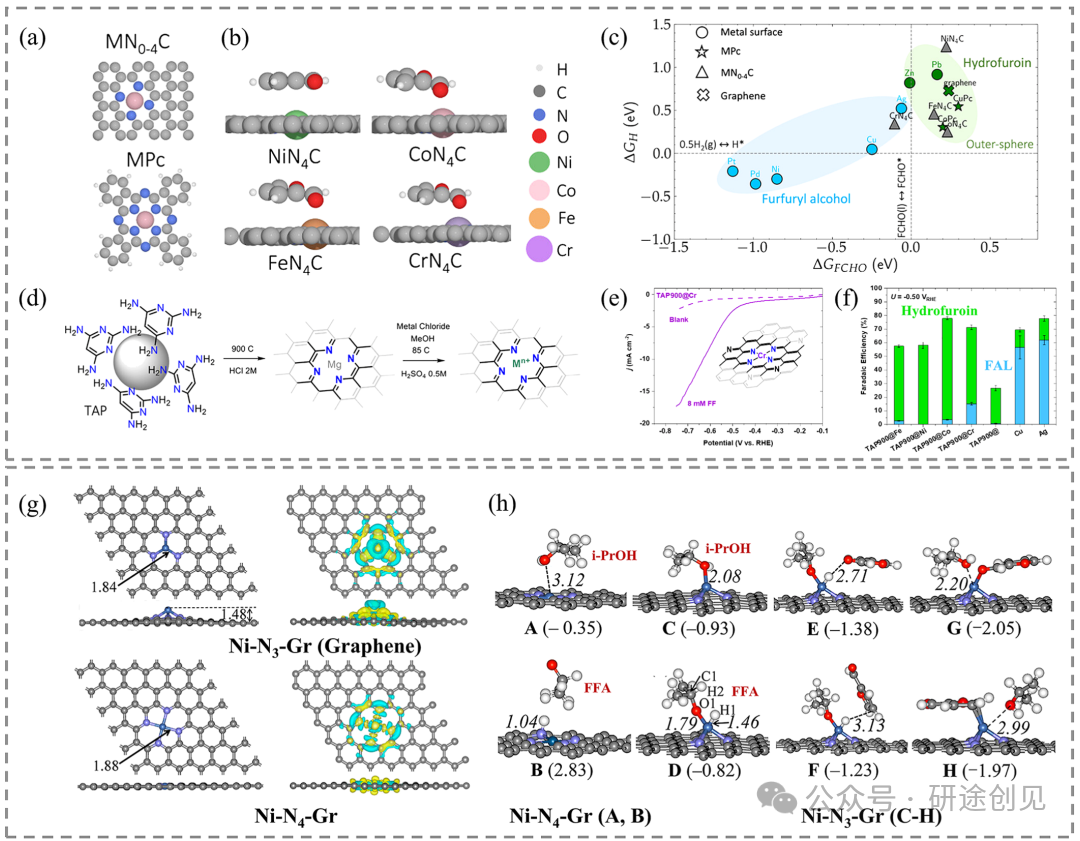
Hydrogenation of 5-HMF. Ru1Cu single-atom alloys supported on Cu nanowires delivered a BHMF production amount of 0.47 mmol cm-2, compared with 0.08 mmol cm-2 for pure Cu. At a 5-HMF concentration of 100 mM, an FE of 85.6% was achieved. Ru1Cu followed an electrochemical hydrogenation pathway, whereas pure Cu favored a concerted proton–electron transfer pathway, with radical intermediates being susceptible to secondary coupling.
Ni2.1/CN, containing Ni–N4 sites with a bond length of 1.89 Å, produced BHMF in 94.1% yield at 160 °C within 3 h using ethanol as the hydrogen donor.
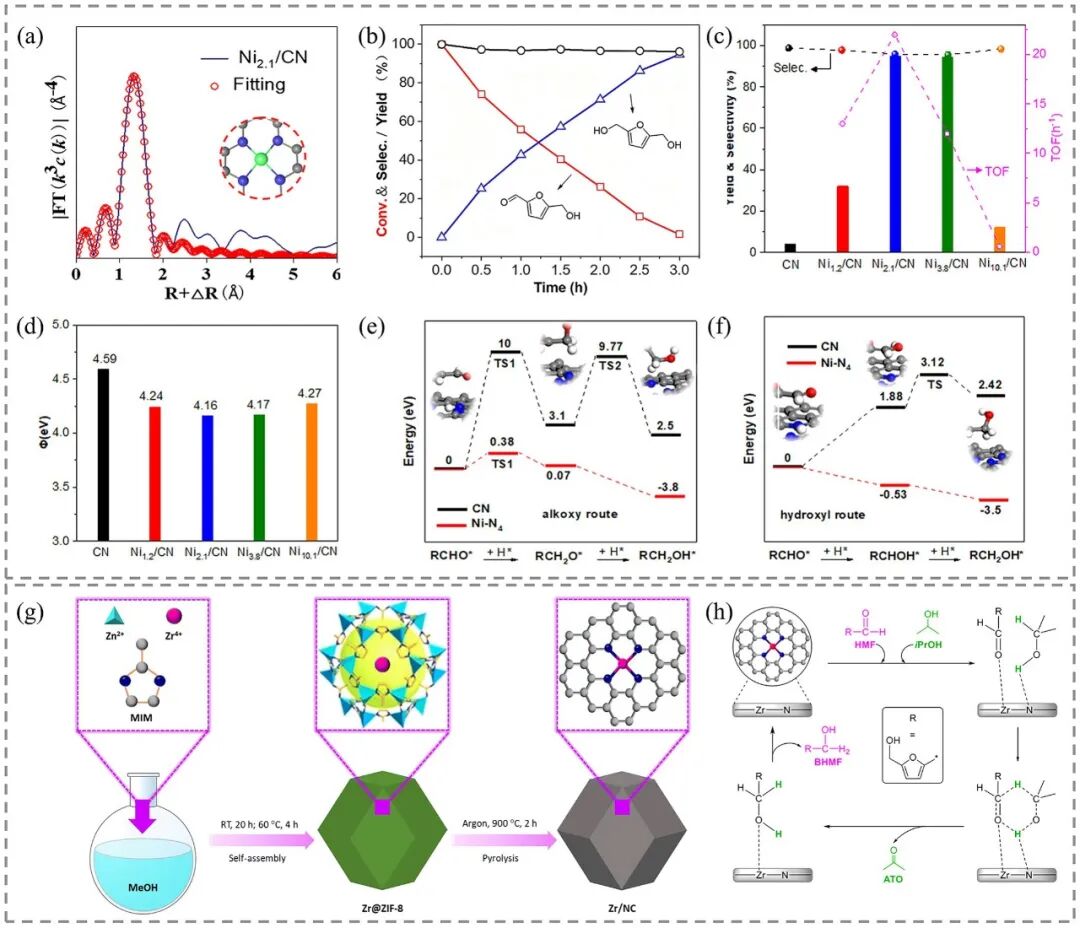
Zr1/NC, containing 0.58 wt% Zr, afforded 93.4% BHMF yield and a TOF of 124.3 h-1 at 130 °C within 2 h. Cooperative Lewis acid–base pairs facilitated transfer hydrogenation through a six-membered transition state. Product yields remained above 95% when ethanol or n-butanol was used as the hydrogen donor, and deactivated catalysts could be regenerated by removing carbon deposits under Ar.
Pd1@Au/TiO2, in which Au nanoparticles stabilized isolated Pd atoms, achieved complete conversion of 5-HMF with 87% selectivity toward HHD and a turnover number (TON) of 48,300. The metal interface lowered the H2 dissociation barrier, while acidic TiO2 sites activated the furan ring.
2.2 Lignin-Derived Compounds
Lignin consists of p-coumaryl, coniferyl, and sinapyl alcohol-derived structural units interconnected through C–O and C–C linkages. Among these, β-O-4 is the dominant linkage, making lignin an important renewable source of aromatic building blocks.
Vanillin (VL) can be hydrogenated to vanillyl alcohol (VA), followed by hydrodeoxygenation to p-cresol, while secondary hydrogenation must be suppressed.
Hydrogenation of phenol to cyclohexanone (CyH) is also an important reaction associated with nylon-66 production.
Ru1+NPs/HPNC achieved approximately 94.0% VA yield with a TOF of 26.9 s-1, exceeding those of Ru1/HPNC (8.4 s-1) and Ru_NP/HPNC (8.8 s-1). Isolated Ru atoms adsorbed and activated vanillin, whereas Ru nanoparticles dissociated H2 and supplied reactive hydrogen through spillover.
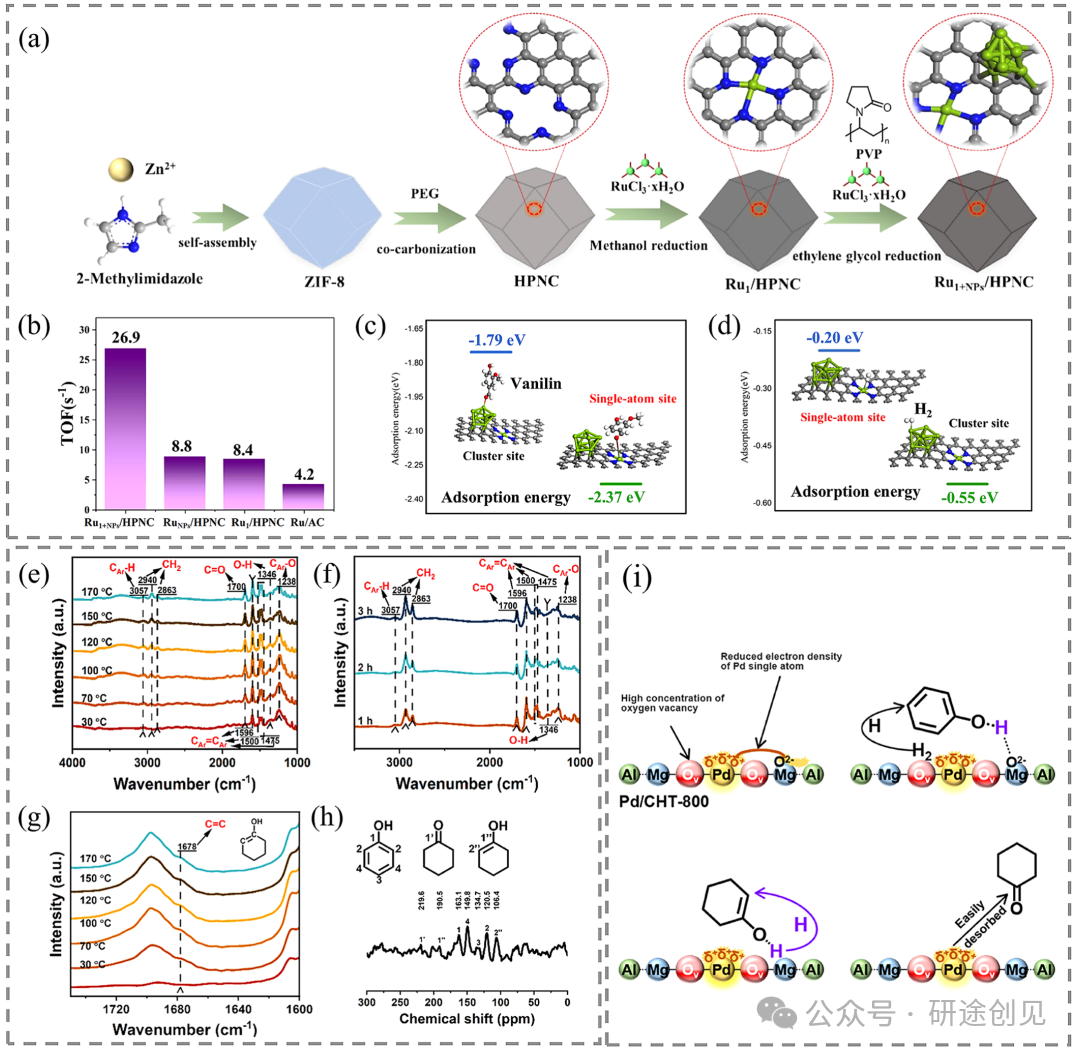
Pd_SA/G, consisting of isolated Pd atoms supported on etched graphene, achieved 96% benzyl alcohol yield from benzaldehyde at 60 °C under 0.7 MPa H2 within 1 h in ethanol.
Pd2/CHT-800, containing atomically dispersed Pd on a hydrotalcite-derived support, achieved greater than 99.9% CyH selectivity at complete phenol conversion.
In situ FTIR and solid-state 13C NMR revealed decreased aromatic-ring signals and increased signals associated with saturated C–H, carbonyl, and hydroxyl groups. Basic O2- sites in the MgO phase facilitated phenol adsorption through interactions with hydroxyl hydrogen atoms. Oxygen vacancies around Pd promoted H2 adsorption at Pd–O–MgAl sites while weakening carbonyl adsorption and suppressing overhydrogenation.
Pt1–CoO/Co achieved 99% phenol conversion with an FE of 87.6% for ketone–alcohol (KA) oil production at −20 mA cm-2. Reactive hydrogen generated at isolated Pt sites migrated to adsorbed phenol molecules.
3. Hydrogenolysis
3.1 Glycerol
Glycerol is a major byproduct of biodiesel production, with approximately 1 ton of glycerol generated per 10 tons of biodiesel.
Selective C–O bond cleavage through hydrogenolysis produces valuable chemicals such as 1,3-propanediol (1,3-PDO) and 1,2-propanediol (1,2-PDO).
In Pt1/WOx, bifunctional interfacial sites played a central role. The lone-pair electrons of glycerol oxygen interacted with unoccupied W6+ d orbitals to form an ether-like bond, weakening the O–H bond.
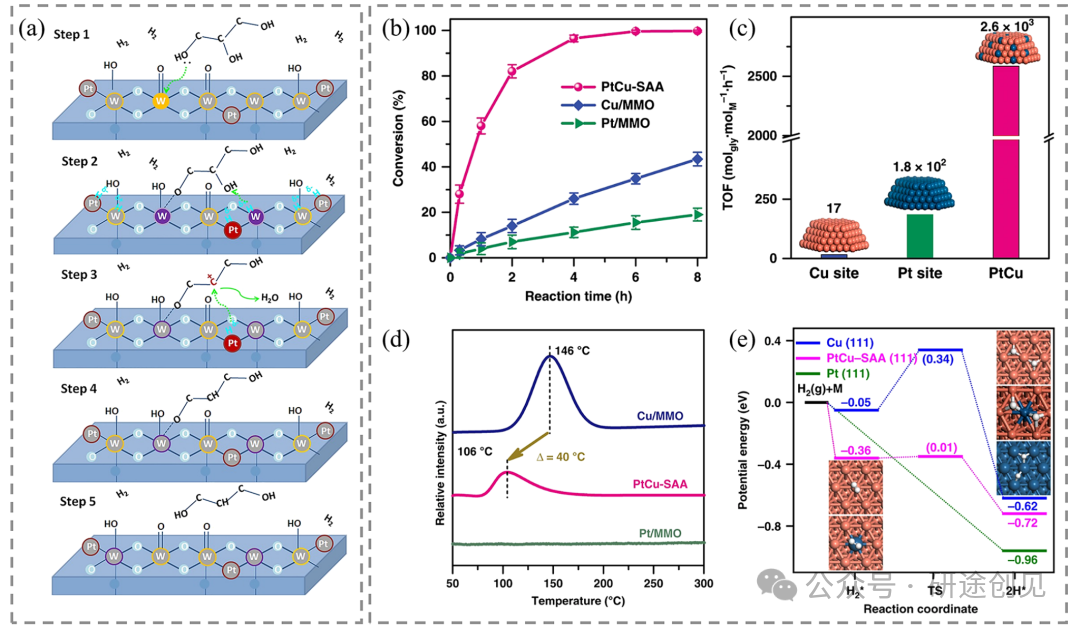
Meanwhile, isolated Pt atoms activated H2, and the oxophilic support promoted C–O bond polarization and cleavage. The interfacial sites generated complementary Hδ+ and Hδ− species, resulting in 59.8% glycerol conversion and 36.3% 1,3-PDO selectivity.
Au-modified Pt/WOx/Al2O3 enhanced electronic and hydrogen-activation synergy. Au–WOx species were located near the perimeter of approximately 2 nm Pt nanoparticles, achieving 77.5% conversion and 54.8% 1,3-PDO selectivity.
PtCu single-atom alloys produced 1,2-PDO with 99.2% yield and a TOF of 2.6 × 10³ mol_glycerol mol-1 h-1. Isolated Pt sites facilitated activation of the central C–H bond, while neighboring Cu sites promoted terminal C–O bond cleavage.
3.2 Levulinic Acid
Levulinic acid (LA), a platform molecule obtained from the hydrolysis of C6 sugars, can be converted into γ-valerolactone (GVL), 1,4-pentanediol, 2-methyltetrahydrofuran, tetrahydrofuran, valeric acid, and other valuable products.
GVL is particularly attractive because of its broad application potential.
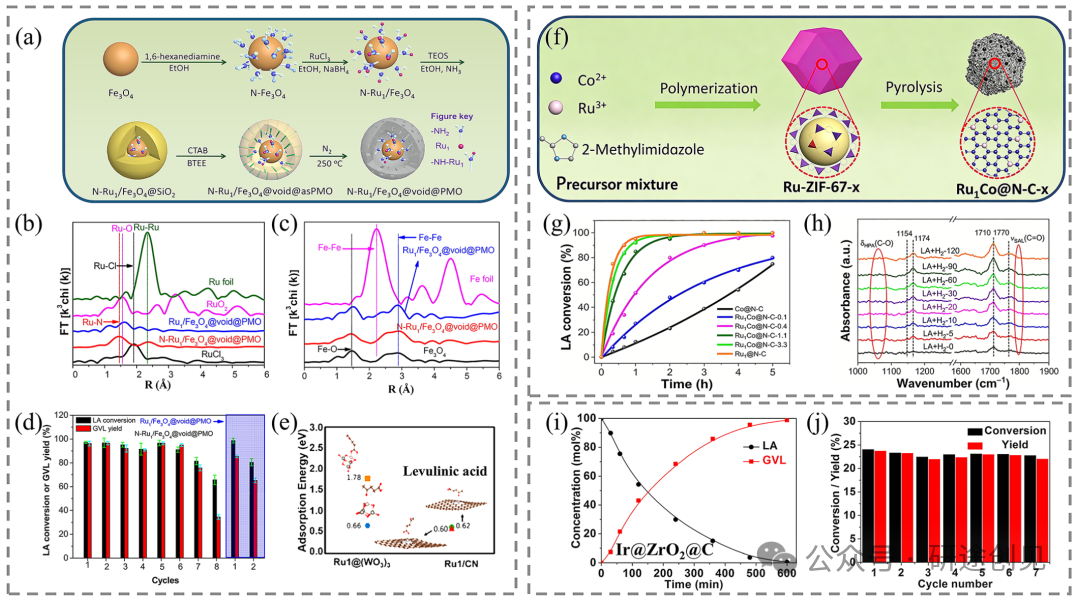
Ru1/Fe3O4@PMO core–shell catalysts achieved 99.0% LA conversion and 98.9% GVL selectivity under strongly acidic conditions (pH ≈ 1), maintaining stability over seven cycles.
In Ru1Co1–N–C, Co induced an electron-rich Ru environment favorable for H2 dissociation, whereas Ru promoted C–O bond activation, resulting in a TOF of 1,980 h-1.
Ru1Co1@N–CSAA achieved a TOF of 3,500 h-1, approximately 27 times that of commercial 5 wt% Ru/C.
In Ir@ZrO2@C, isolated positively charged Ir atoms were confined between approximately 3.0 nm ZrO2 particles and carbon, delivering GVL yield above 99% without aggregation over seven cycles.
CoNPs/SAs-NC@HNC, a yolk–shell catalyst containing nearly equimolar Co nanoparticles and single atoms, achieved 99.0% GVL yield. Nanoparticles dissociated H2, while isolated atoms enhanced C–O adsorption and activation.
3.3 Furfural and Furfuryl Alcohol
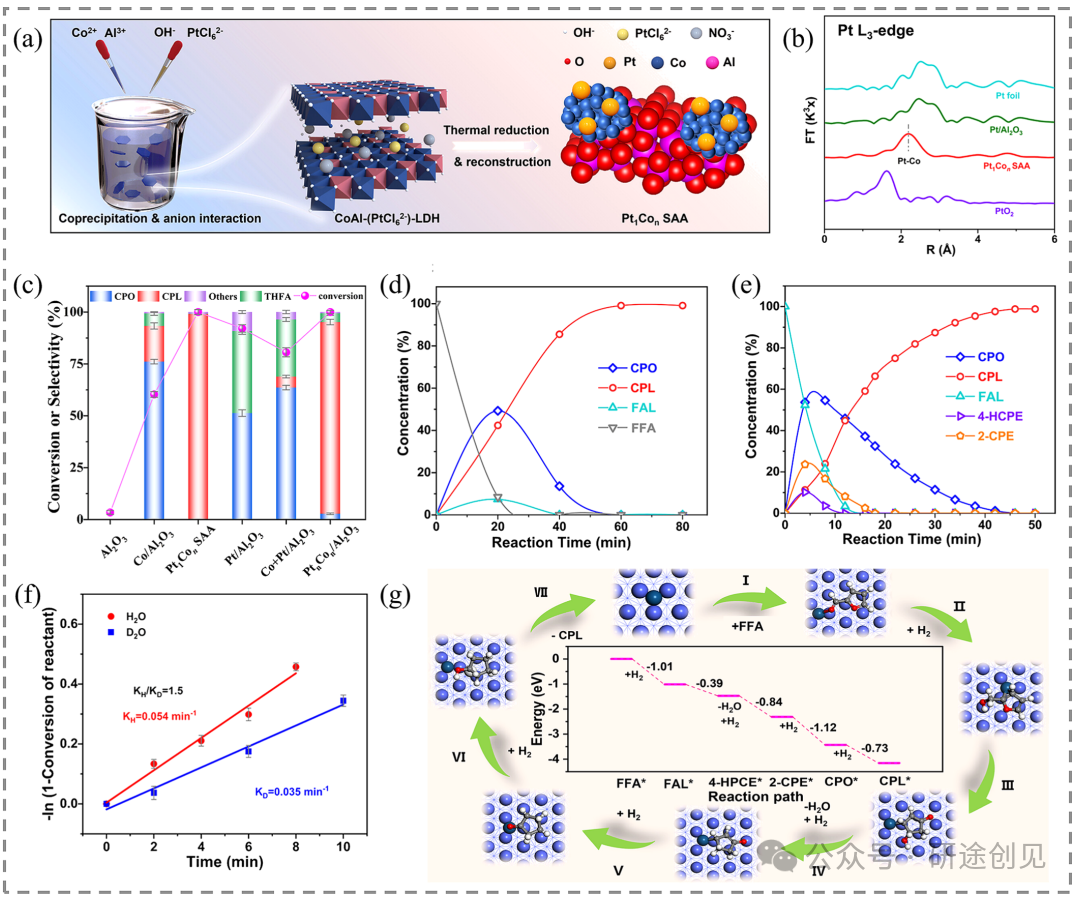
FFA and FAL can undergo sequential hydrogenation, hydrogenolysis, and rearrangement to produce 2-methylfuran (2-MF), 2-methyltetrahydrofuran (2-MTHF), cyclopentanol (CPL), and 1,2-pentanediol (1,2-PeD).
Pt1Con single-atom alloys were prepared through controlled reduction of PtCl62- anchored on CoAl layered double hydroxides. The resulting catalysts promoted tandem hydrogenation–rearrangement, achieving CPL yields above 93% and a TOF of 2,257 h-1.
The Pt–Co interface enhanced carbonyl adsorption and reduced the activation barrier for cyclopentanone hydrogenation. Isotope-labeling experiments and EPR measurements confirmed that water participated in furan-ring reconstruction.
Cu₈Pd1/Al2O3, using isopropanol as both solvent and hydrogen donor, achieved 80.8% 2-MF yield at a Cu/Pd ratio of 8:1.
Ultralow-loading Pt1/TiO2 increased the concentration of surface oxygen vacancies, enhancing C–O bond cleavage activity by a factor of 31 compared with pristine TiO2.
Pd1+NP/AlPO4 contained both isolated Pd atoms and nanoparticles. Frustrated Lewis pair (FLP) sites at Pd–O–P interfaces facilitated heterolytic H2 dissociation, producing 2-MTHF with 83.3% selectivity at 30 °C.
3.4 5-Hydroxymethylfurfural
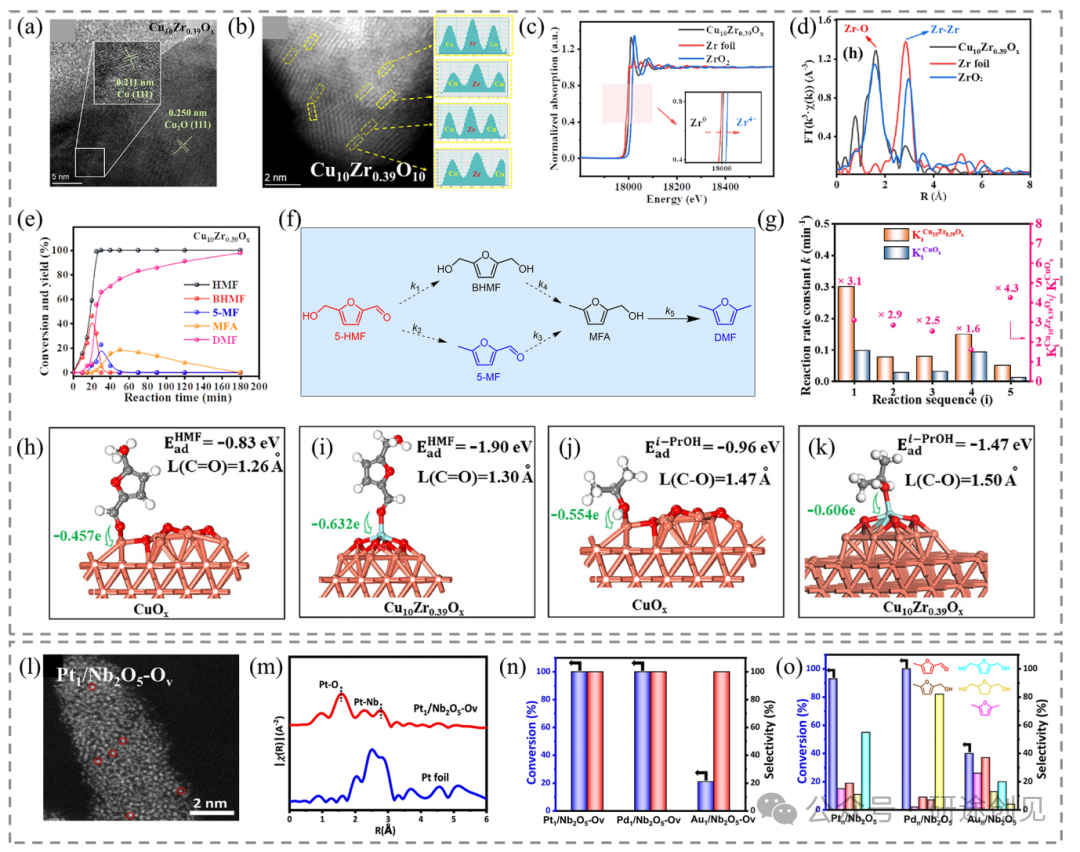
5-HMF contains C=O, C–OH, and furan-ring functionalities. Sequential hydrogenation, hydrodeoxygenation, and hydrogenolysis can generate 2,5-dimethylfuran (DMF), methylfurfuryl alcohol (MFA), 5-methylfurfural (5-MF), 2,5-dimethyltetrahydrofuran (DMTHF), and 2-hexanol.
Pt1/Ni3Fe intermetallic catalysts achieved 99% 5-HMF conversion and 98.1% DMF yield within 30 min, retaining activity over six cycles. Isolated Pt atoms promoted C=O hydrogenation, whereas the Ni3Fe interface facilitated C–OH cleavage.
Pt1/Co single-atom alloys were synthesized by ball milling on a kilogram scale, with the approach extended to Pd, Ru, Ir, Rh, and other M1/Co systems. DMF selectivity reached 92.9% at 180 °C.
Ir-F2MoS2, featuring isolated Ir atoms doped into ultrathin MoS2, achieved 96.5% DMF yield without significant deactivation over five cycles.
Cu10Zr0.3₉Ox stabilized Cu⁺ through positively charged Zr Lewis acid sites while enhancing catalyst acidity, affording 97.7% DMF yield at a reaction rate of 8.1 mmol g_cat-1 h-1 over five cycles.
Pt1/Nb2O5–Ov achieved greater than 99% selectivity toward 5-MF at 160 °C under 4 MPa H2 within 4 h.
Surface hydrogen coverage and substrate adsorption geometry strongly influenced hydrogenation pathways. Low H* coverage favored radical coupling, while Pd nanoparticles promoted flat-lying adsorption configurations.
3.5 Cellulose
Cellulose has a high oxygen-to-carbon ratio and represents a promising renewable feedstock for producing bulk oxygenated chemicals, including ethylene glycol and ethanol.
Ni-based catalysts exhibit high activity in hydrogen-involving reactions, but low-valence Ni0/Niδ+ species are vulnerable to leaching and deactivation under acidic conditions.
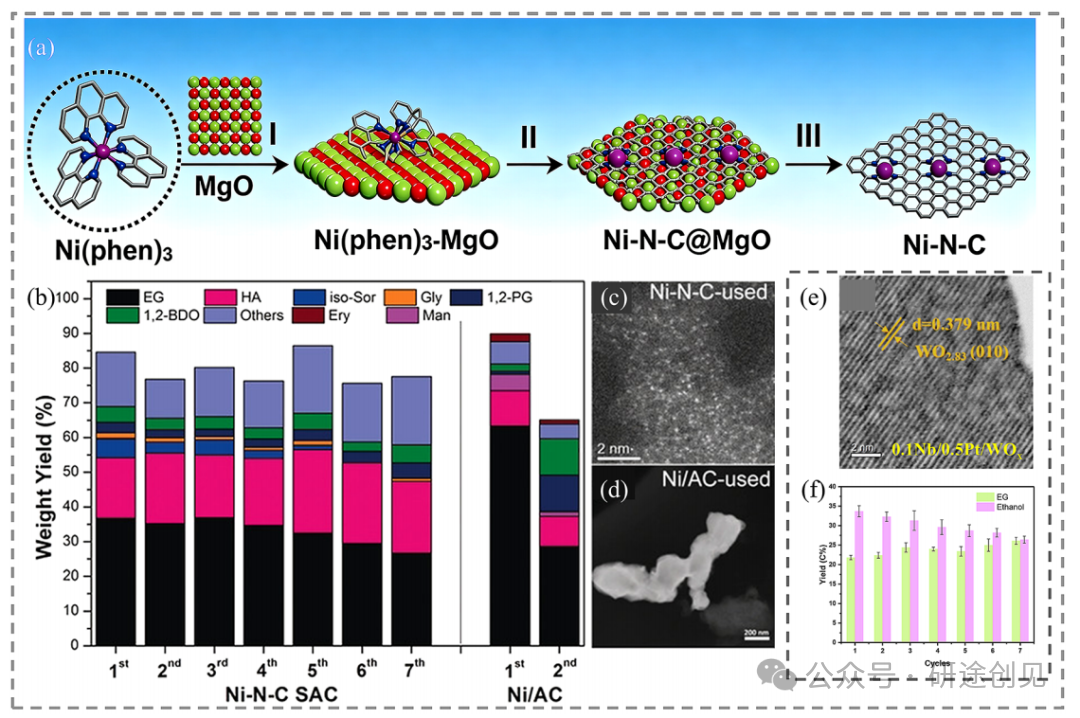
High-loading Ni–N–C SACs containing (Ni–N4)·N frustrated Lewis pairs catalyzed cellulose conversion to ethylene glycol at 245 °C under 60 bar H2 in the presence of tungstic acid, maintaining stability for at least seven cycles without metal aggregation.
Pyridinic nitrogen and distorted Ni coordination sites formed FLPs that promoted heterolytic H2 cleavage, while strong Ni–N covalent bonding enhanced structural stability.
A multifunctional Mo/Pt/WOx catalyst enabled one-pot cellulose conversion to ethanol with a carbon-based yield of 43.2% at 245 °C under 6 MPa H2 for 2 h.
The cascade process involved rapid cellulose depolymerization to ethylene glycol followed by hydrogenolysis to ethanol, with the second step being rate-limiting.
Isolated MoOx species bonded to WOx-supported Pt nanoparticles of approximately 2 nm formed OMo–Pt–WOx interfacial structures.
3.6 Lignin-Derived Phenolic Compounds
Noble-metal SACs. Phenolic compounds such as vanillin, guaiacol, and 4-propylguaiacol can be converted into aromatic hydrocarbons through hydrodeoxygenation (HDO) and hydrogenolysis.
Pd1/WO2.72 achieved 99% MMP yield within 15 min, with a TOF of 13,920 h-1.
Pd1/ZSM-5 promoted H2 dissociation at isolated Pd centers and substrate activation at Brønsted acid sites, yielding cyclohexanone from anisole with 91.2% selectivity and a TOF of 400.8 h-1.
Pt0.4/CsPW-H2 achieved 97% hydrocarbon selectivity from phenolic compounds. When applied to eucalyptus-derived reductive catalytic fractionation lignin oil, it produced 32.7 wt% cyclohexane and maintained stability over 20 cycles without metal leaching.
Pd0.25/CNx afforded a 52.7% carbon yield of phenolic monomers from birch lignin while recovering 84.2 wt% of the holocellulose fraction. Precious-metal loading was reduced by more than 20-fold relative to conventional catalysts.
Au1/Nb2O5 achieved 84.2% methylphenol yield from methylcatechol and 66.7 wt% product yield from lignin oil, maintaining activity over five cycles. Au atoms were embedded into Nb–O structures, forming four-center Nb–Au–O–Nb configurations.
Pt/Nb2WO₈, containing 3.30 wt% Pt, produced aromatic monomers with a yield of 49.1%.
DFT calculations indicated that stepped and edge sites were more active than planar sites, while alloy oxophilicity served as an important descriptor for deoxygenation, with Mo exhibiting particularly favorable properties.
Non-noble-metal SACs. Co-, Ni-, and Mo-based SACs also exhibit promising activity in phenolic HDO.
Co–S/MoS2 achieved 96.0% toluene selectivity from 4-methylphenol, with sulfur vacancies at Co–S–Mo interfaces identified as the main active sites.
Co1-NPs@NC promoted H2 dissociation on nanoparticles and C_ar–OCH3 bond cleavage at isolated Co atoms, yielding cyclohexanol with 97.1% selectivity.
Mo/NiFe-V71, prepared using a cation-vacancy strategy, achieved nearly complete conversion of enzymatic lignin and 99.5% cyclohexane selectivity at 240 °C. Activity remained at 92.1% after six cycles, while the Mo–Ni coordination number decreased from 10.1 to 4.6.
Ni0.5%/AlN stabilized quinone intermediates through basic sites, achieving 52.7% monophenol yield and 58.7% selectivity toward C8 phenols over five cycles.
Ni1/β-Mo2C promoted flat-lying adsorption of aromatic rings, providing propylcyclohexane selectivity above 99%.
Cu2/Ni-SA@HNC preferentially cleaved Cα–Cβ bonds in β-O-4 linkages, achieving 75.7% toluene yield from model compounds and 33.7 ± 1.6 wt% from poplar lignin. Continuous-flow operation delivered a space–time yield of 33.7 g g_cat-1 h-1.
4. Reductive Amination
4.1 Furan Compounds
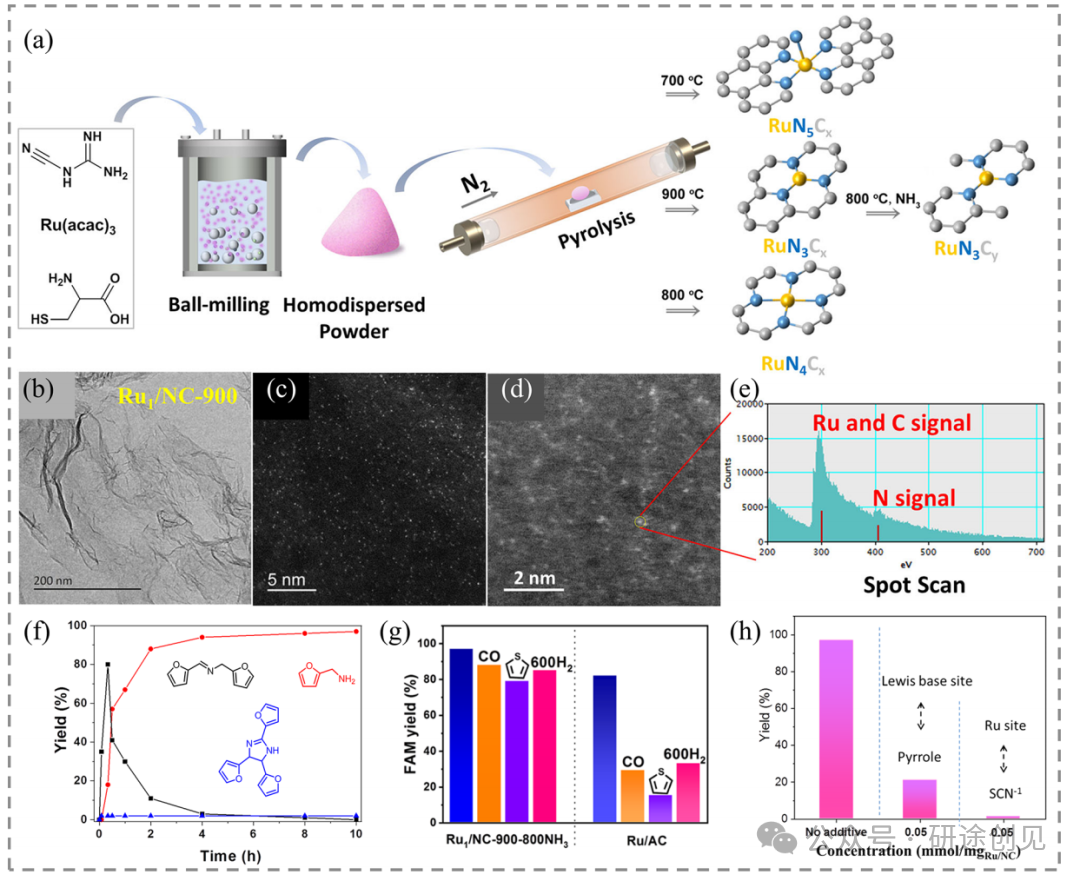
Using furfural reductive amination as a probe reaction, Ru1/NC catalysts with RuN5, RuN4, and RuN3 coordination structures were constructed by adjusting pyrolysis temperature.
Ru maintained a Ru2+ oxidation state, while its electron density increased as Ru–N coordination decreased, progressively enhancing hydrogen activation.
The optimized Ru1/NC-900−800NH catalyst achieved 97.0% furfurylamine yield with 99% primary-amine selectivity. It balanced H2 activation and NH3 tolerance under ammonia-rich conditions and exhibited resistance to sulfur and CO poisoning as well as stability after H2 reduction at 600 °C.
Computational results showed that NH3 adsorption on Ru1–N5 was thermodynamically unfavorable, with an adsorption free energy of +17.7 kJ mol-1.
The Ru1–N3 configuration exhibited a Hirshfeld positive charge of +0.401 on Ru, compared with +0.355 for Ru1–N4. Its greater availability of unoccupied 4d orbitals facilitated acceptance of nitrogen lone-pair electrons and stronger NH3 adsorption and activation, which was essential for imine formation.
Other configurations preferentially activated H2, promoting FAL formation rather than furfurylamine.
In Ru1Co_NP/HAP single-atom alloys, product selectivity was controlled through the Ru:Co ratio. At 100 °C for 6 h, a 10:10 nanoparticle composition primarily produced furfurylamine (91%), whereas decreasing the ratio to 2:20 shifted selectivity toward piperidine. At 1:40, piperidine yield reached 93%.
Isolated Ru atoms anchored on Co nanoparticles were essential for piperidine formation. Cleavage of the C–O bond adjacent to NH2 in the tetrahydrofurfurylamine intermediate generated 5-amino-1-pentanol, followed by dehydration and intramolecular cyclization.
Coordination engineering also enables precise modulation of electronic structures.
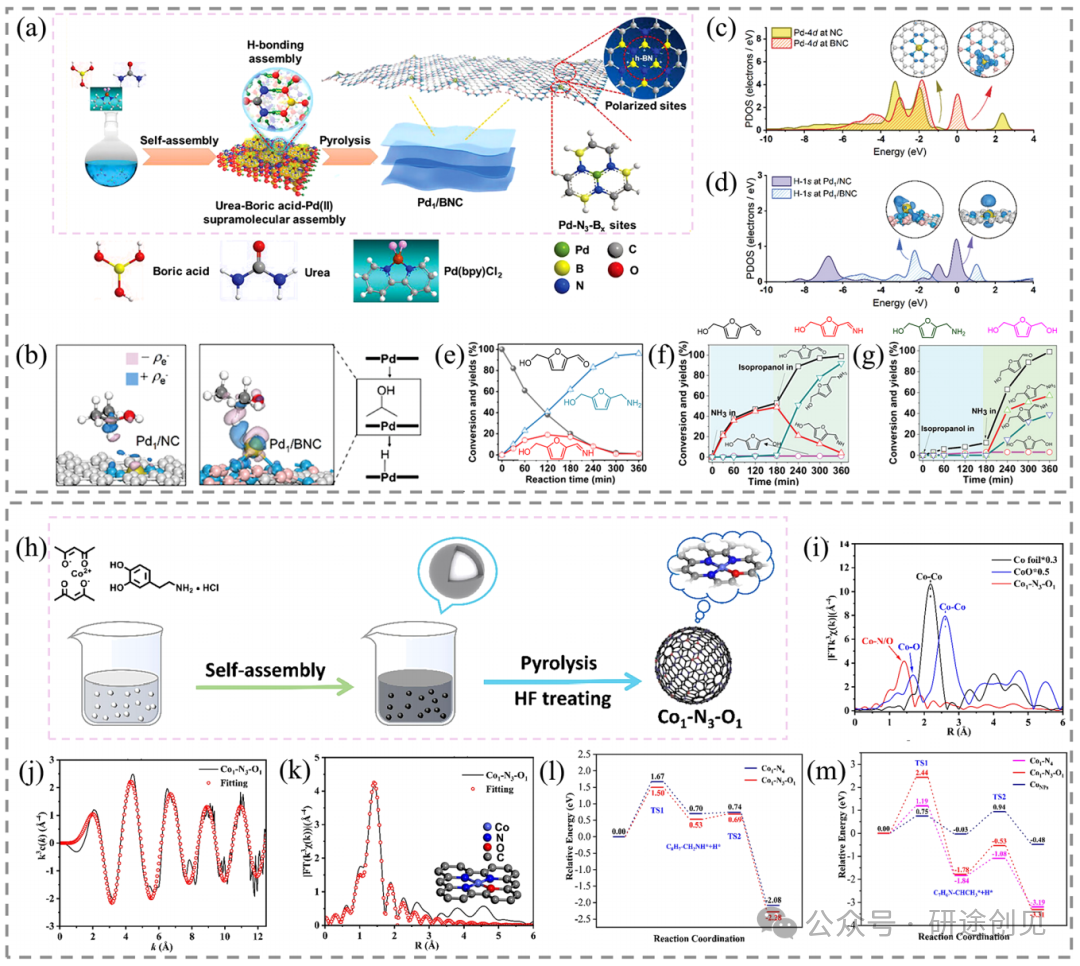
Electron-deficient B and electron-rich N form partially ionic B–N bonds, generating local electric fields around isolated metal centers. These fields interact with carbonyl dipoles to promote aldehyde and ketone adsorption and activation.
Liu and co-workers prepared Pd1/BNC containing B-doped carbon and Pd–N coordination by assembling MOF precursors through hydrogen-bonded boric acid–urea supramolecular complexes.
Control experiments identified the reduction step, rather than amination, as rate-determining. The catalyst afforded 96% yield of the reductive amination product of 5-HMF within 6 h.
DFT calculations showed that isopropanol dissociated at Pd sites to form H*, with Pd1/NC exhibiting more efficient H* generation, whereas the B–N-induced local electric field facilitated carbonyl adsorption and activation.
Non-noble-metal SACs also showed promising performance. Fe–N–C delivered 85% furfurylamine yield and enabled the synthesis of primary, secondary, and tertiary amines as well as N-methylated derivatives, with water as the sole byproduct. However, catalyst stability remained insufficient for practical applications.
For the reductive amination of 4-vinylbenzaldehyde, a Co-based SAC achieved greater than 99% 4-vinylbenzylamine yield at 120 °C within 2 h, compared with only 20% for Co nanoparticles.
Introducing O atoms into the coordination shell increased the hydrogenation barrier of the terminal C=C bond, suppressing competing hydrogenation. The Co1–N3–O configuration simultaneously lowered the reduction barrier of C=N bonds, favoring the synthesis of unsaturated benzylamines and aromatic amines.
4.2 Other Biomass-Derived Feedstocks
Compared with primary and secondary amines, the synthesis of N-heterocycles such as piperidine, pyridine, and pyrrole from biomass remains relatively underexplored because most biomass-derived platform molecules do not naturally contain N-heterocyclic frameworks.
Pyrrolidinones are important five-membered heterocycles widely used as surfactants, chelating agents, and precursors for pharmaceuticals and agrochemicals.
Co–N–C SACs catalyzed the reductive amination of LA with furfurylamine to produce pyrrolidinones in 97% yield, significantly outperforming conventional Co nanoparticles.
The same catalyst enabled the conversion of LA with nitro compounds, nitriles, or ammonia into various bio-based pyrrolidinone derivatives through tandem reductive amination–amidation processes.
Single-atom–nanoparticle cooperative systems are particularly attractive for cascade reactions.
Co_SAs-NPs/NC, containing both isolated Co atoms and nanoparticles within an N-doped carbon matrix, enabled the synthesis of benzimidazoles through tandem transfer hydrogenation, dehydrogenation, and cyclization, achieving 91.1% yield.
Alcohol dehydrogenation primarily occurred at isolated Co sites, whereas hydrogenation of nitro-containing intermediates proceeded over Co nanoparticles.
Another Co–N–C system, comprising graphene-encapsulated Co nanoparticles and isolated Co atoms, enabled nearly quantitative cyclohexylamine production from cyclohexanone at 35 °C.
Co nanoparticles dissociated H2, while Co–Nx sites acted as acidic centers to activate Schiff-base intermediates.
However, its high total Co loading of 34.5 wt% meant that only a small fraction of isolated atoms participated in intermediate activation, leaving much of the nanoparticle phase underutilized.
5. Oxidation Reactions
5.1 5-Hydroxymethylfurfural
Thermocatalytic oxidation
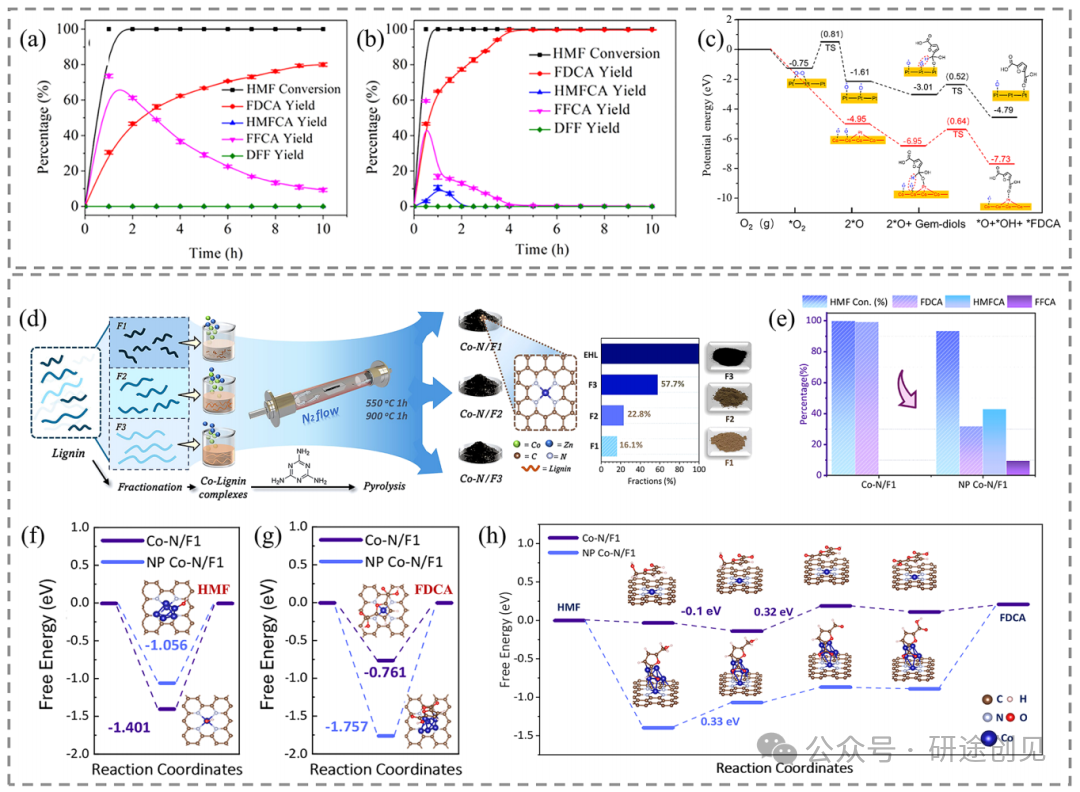
Selective oxidation of the hydroxyl and/or aldehyde groups in 5-HMF produces valuable chemicals including 2,5-furandicarboxylic acid (FDCA), 5-hydroxymethyl-2-furancarboxylic acid (HMFCA), 2,5-diformylfuran (DFF), and other furan derivatives.
Among these, FDCA is considered an important bio-based alternative to terephthalic acid.
Efficient catalysts must simultaneously activate O2 to generate reactive oxygen species and optimize the adsorption of substrates and reaction intermediates.
The oxidation state and electronic structure of isolated metal sites strongly influence catalytic activity.
Pt1–Co3 single-atom alloys, containing only 0.06 wt% Pt, achieved 99.6% FDCA yield. Negatively charged Pt atoms (−0.446 e) were associated with high catalytic activity, whereas positively charged Pt atoms (+0.712 e) in Pt1–N4 exhibited weak adsorption of O2 and intermediates and were catalytically inactive. Neighboring Co sites served as preferred centers for O2 adsorption and activation.
Pd1–MnO2 achieved 88.1% FDCA yield through strong 5-HMF adsorption associated with the Mn3+/Mn4+ redox cycle.
Co–N4/F1 achieved 99.2% FDCA yield at 65 °C under 3 bar O2, with Co–N4 sites promoting Cα dehydrogenation.
In (Co1→Co_p)/N-CNTs, isolated Co atoms and Co nanoparticles cooperatively catalyzed sequential oxidation, with alcohol oxidation occurring at single-atom sites and aldehyde oxidation at nanoparticles. FDCA yield reached 96.0%.
Ru1/Fe–NC enabled base-free oxidation through electronic metal–support interactions (EMSI), which generated electron-rich Ru centers and promoted superoxide radical (•O2⁻) formation, resulting in 98.6% FDCA yield.
Base-free Fe–N–C/γ-Al2O3 achieved 99.9% conversion and 99.8% FDCA yield through a hemiacetal-mediated pathway involving HMFCA and FFCA intermediates. The catalyst maintained stability over six cycles. Acid–base sites cooperatively activated aldehyde groups, while Fe–N5 sites activated O2 to produce singlet oxygen.
DFF production. Ru1/NiO achieved 91.1% conversion and 81.3% DFF selectivity.
Ni–Pd dual-single-atom catalysts promoted lattice oxygen consumption and regeneration, enhancing activity threefold and achieving nearly 100% DFF selectivity.
Cu1Cun@CN combined isolated atoms and clusters to modulate Cu 3d orbitals, producing DFF in nearly 99% yield.
Mn3Co2/N-C dual-single-atom catalysts achieved 95.8% FDMC yield, with distinct oxygen species selectively participating in alcohol and aldehyde oxidation.
Electrocatalytic oxidation
Electrocatalysis enables biomass oxidation under mild conditions through applied-potential control.
The theoretical potential for the 5-HMF oxidation reaction (HMFOR) is 0.3 V versus the reversible hydrogen electrode (RHE), significantly lower than the 1.23 V required for the oxygen evolution reaction (OER).
Coupling anodic HMFOR with cathodic hydrogen evolution therefore offers an energy-efficient route to simultaneous FDCA production and green hydrogen generation.
Ru1–Co3O4 achieved 10 mA cm-2 at only 1.191 V in 0.1 mol L-1 KOH. Isolated Ru atoms strengthened OH adsorption under hydroxyl-deficient conditions.
In 0.5%Ru/CoOx, trace Ru accelerated the Co2+/Co3+/Co4+ redox cycle, increasing FDCA selectivity to 76.5%, compared with 62.7% for pristine CoOx.
Ru0.3/NiFe LDH achieved 99.43% 5-HMF conversion and 98.6% FDCA yield.
Ru-E-CoFeOx/NF, comprising isolated Ru atoms and clusters on low-crystallinity CoFeOx, delivered a current density of 78.28 mA cm-2 at 1.45 V.
Rh–O5/Ni(Fe) reached 100 mA cm-2 at 1.48 V and maintained stable operation for 100 h in an integrated electrolyzer. Rh–Ni d–d orbital coupling facilitated intermediate adsorption, while Fe improved structural stability.
Ir1/Co3O4, featuring isolated Ir atoms on a spinel support, enhanced C=C adsorption in 5-HMF and achieved an onset potential of 1.15 V versus RHE.
Photocatalytic oxidation
Photocatalysis enables selective bond activation under mild conditions through photogenerated charge carriers and reactive radicals.
However, the multiple functional groups present in biomass-derived molecules can cause uncontrolled charge transfer and poor product selectivity.
In CoSAC-TiTiONFs, isolated Co atoms substituted Ti lattice sites, achieving 57% 5-HMF conversion and a combined DFF and FDCA production rate of 1,718.66 μmol g-1 h-1.
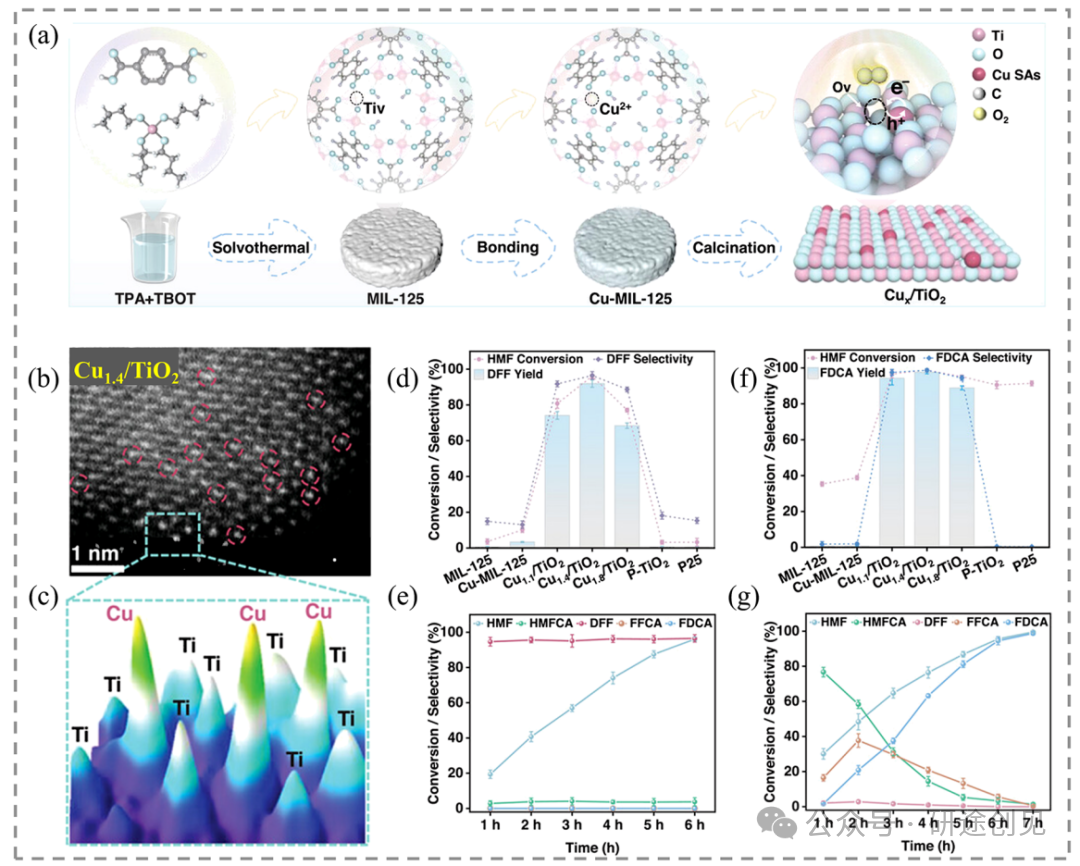
Cu1/TiO2 enabled wavelength-dependent product switching.
Under visible light (420–780 nm), DFF yield and selectivity reached 91.9% and 96.5%, respectively.
Under UV–visible irradiation (320–780 nm), FDCA yield reached 98.2% with 98.7% selectivity after 7 h.
The Cu–Ov–Ti structure promoted cooperative charge separation and oxygen activation. Isolated Cu atoms trapped photogenerated holes, while oxygen vacancies and Ti3+ species facilitated charge separation and O2 conversion into reactive oxygen species.
CuSAs/p-CNS, containing Cu–N4 and C–S–C motifs, enhanced spatial charge separation, affording 77.1% conversion and 85.6% DFF selectivity.
Co1/ZnIn2S4 achieved 98.6% conversion and 92.4% DFF selectivity.
Ni1/ZIS simultaneously produced DFF with greater than 97% selectivity at a rate of 394 μmol g-1 h-1 and H2 at 342.2 μmol g-1 h-1.
Isolated Ni centers preferentially adsorbed hydroxyl groups to facilitate selective oxidation, while S sites exhibited more favorable ΔG_H* values for hydrogen evolution.
5.2 Glucose
Glucose, obtained from cellulose hydrolysis, can be selectively oxidized into gluconic acid (GNA) and glucaric acid (GRA).
These products are valuable for food additives, concrete retarders, pharmaceutical supplements, and bio-based polymer production.
Conventional chemical oxidation methods for GRA often require harsh conditions and exhibit limited selectivity, while microbial fermentation suffers from long processing times and difficult product separation.
Re1-phen/NiO was prepared using a (1,10-phenanthroline)methyltrioxorhenium precursor supported on NiO.
The Re atom was positioned approximately 4.7–6.4 Å above the support surface without direct bonding. Glucose coordinated simultaneously through its terminal functional groups, adopting an arc-like configuration favorable for multistep oxidation.
The catalyst achieved 94.0% GRA yield with 95% FE.
Pt/def-TiO2 photoanodes produced GRA with 84.3% yield through photoelectrochemical oxidation. Defective TiO2 facilitated charge extraction, while isolated Pt centers directed adsorption toward primary alcohol groups.
Fe1/CN operated through a Fenton-like mechanism dominated by singlet oxygen. Under peroxymonosulfate and simulated sunlight conditions, glucose conversion reached 36.3%, with 91.6% GNA selectivity and 33.3% yield.
Co–N5 catalysts, featuring asymmetric electronic structures, coupled two-electron oxygen reduction with glucose oxidation to formic acid, achieving 84.1% conversion.
CuO-MOF-Pt1 utilized the electron-withdrawing effect of –CN groups and high-valence Cu3+ species to enhance electrochemical oxidation.
5.3 Lignin and Its Derivatives
Oxidative lignin valorization provides access to valuable building blocks, including dicarboxylic acids, quinones, amides, and esters.
The β-O-4 linkage, with a bond dissociation energy of approximately 209–348 kJ mol-1, is generally weaker than the Cα–Cβ linkage (314–494 kJ mol-1), making it a major target for oxidative cleavage.
Co–N–C achieved 95% conversion of β-O-4 model compounds through C–O cleavage, radical oxidation, and subsequent C–C bond scission, yielding guaiacol (59%) and methyl benzoate (83%).
Co-L1@NC-800, a mesoporous carbon-supported catalyst, promoted superoxide radical generation and achieved 99% conversion of lignin model compounds into benzamide derivatives, including benzanilide (84%) and α-ketoamides (14%).
Cu4C/Co2N6@NC dual-single-atom catalysts enabled tandem synthesis of 2-phenylquinoline through C–O cleavage, alcohol oxidation, C–C coupling, and N-heterocycle construction.
The catalyst achieved 93.7% yield and a space–time yield of 75.7 g g_cat-1 h-1.
Ir1Cu1–In2O3 dual-atom catalysts promoted oxidative cleavage of isoeugenol to vanillin with 90.5% yield. Cooperative Ir and Cu sites lowered the energy barrier for O2 adsorption and dissociation, and the catalyst remained stable over eight cycles.
Fe@NC-800 achieved 97% methyl benzoate yield without precious metals or additional reagents.
Pt1/N-CNTs, containing isolated Pt–N3C1 centers, enabled room-temperature electrocatalytic Cα–Cβ cleavage, achieving 99% conversion and 81% benzaldehyde yield.
Despite a Pt loading of only 0.41 wt%, its activity significantly exceeded that of bulk Pt and commercial 20 wt% Pt/C.
Ru1/MCN promoted visible-light-driven C–C cleavage with greater than 99% conversion and 98% selectivity, providing 2-phenoxyacetophenone and benzaldehyde in yields of 92.0% and 90.0%, respectively.
6. Conclusions and Outlook
This review highlights the remarkable progress of SACs in lignocellulosic biomass valorization through four major reaction classes: selective hydrogenation, hydrogenolysis, reductive amination, and oxidation.
Atomic dispersion, well-defined M–Nx/M–Ox coordination environments, and strong metal–support interactions enable SACs to achieve high catalytic activity, selectivity, and tunability.
Cooperative interactions among isolated metal atoms, single-atom alloys, supports, and nanoparticles are increasingly recognized as essential strategies for improving catalytic activity, stability, and product selectivity.
Looking ahead, seven major research directions are emphasized:
1. Coordination Environment Engineering
Extend active-site engineering beyond the first coordination shell of N or O atoms toward precise regulation of the second and third coordination shells, enabling more comprehensive control over electronic structures and catalytic microenvironments.
2. Catalyst Stability
Develop strong anchoring sites, pore confinement strategies, and single-atom alloy structures to suppress metal migration, aggregation, leaching, and poisoning under realistic reaction conditions.
3. Cooperative Catalytic Effects
Quantitatively distinguish electronic effects from cooperative reaction pathways such as hydrogen spillover, and rationally design multifunctional interfaces for cascade transformations.
4. Scalable Synthesis
Advance continuous-flow preparation, mechanochemical synthesis, and self-assembly methods to achieve kilogram-scale, reproducible production of high-loading SACs with uniformly distributed active sites.
5. Mechanistic Understanding
Develop advanced in situ and operando characterization techniques suitable for liquid-phase reactions, and integrate experimental observations with DFT calculations and machine learning to establish reliable structure–activity relationships.
6. Conversion of Real Biomass Feedstocks
Construct hierarchically porous supports, poisoning- and coke-resistant active sites, and multifunctional catalytic architectures capable of processing complex biomass feedstocks rather than only simplified model compounds.
7. Sustainability and Technoeconomic Evaluation
Incorporate life-cycle assessment (LCA) and technoeconomic analysis (TEA), using cradle-to-grave frameworks to compare SACs with conventional nanoparticle catalysts and accelerate their practical deployment in integrated biorefineries.
Overall Perspective
Single-atom catalysis offers an opportunity to transform biomass valorization from conventional nanoparticle-based approaches toward atomically defined catalytic systems.
By integrating precise coordination engineering, electronic-structure modulation, and cooperative reaction pathways, SACs provide a versatile platform for the selective conversion of renewable carbon resources into high-value chemicals and fuels.
Future advances will depend not only on improving catalytic performance under laboratory conditions but also on bridging the gap between fundamental active-site understanding, scalable catalyst manufacturing, and economically viable biomass processing.
Source: https://mp.weixin.qq.com/s/hv6cEYDe2FPtO3My6BpzWA

